Explain cache memory with diagram
Home » Background » Explain cache memory with diagramYour Explain cache memory with diagram images are ready in this website. Explain cache memory with diagram are a topic that is being searched for and liked by netizens now. You can Get the Explain cache memory with diagram files here. Find and Download all free images.
If you’re looking for explain cache memory with diagram pictures information related to the explain cache memory with diagram topic, you have pay a visit to the ideal site. Our site frequently provides you with hints for viewing the highest quality video and image content, please kindly search and find more enlightening video content and images that match your interests.
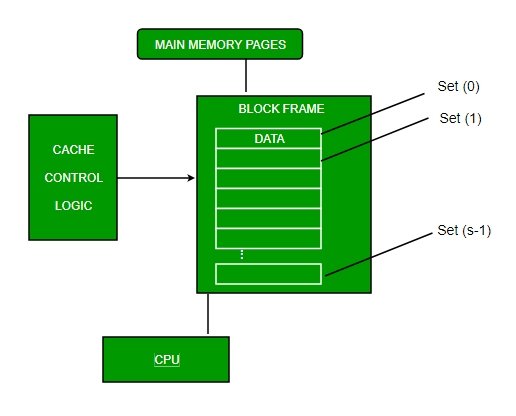
Explain Cache Memory With Diagram. 4-way set associative cache. A cache controller always tries to make sure that the data required by the processor in the next memory access is available in the cache memory. In which cache memory will have 2048 blocks containing four lines each 8192 lines 4. 2 Access time to cache memory is less compared to main memory.
 4 Cache Memory Organization From edux.pjwstk.edu.pl
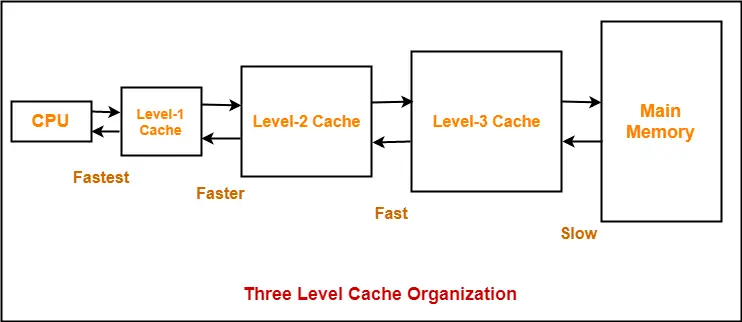
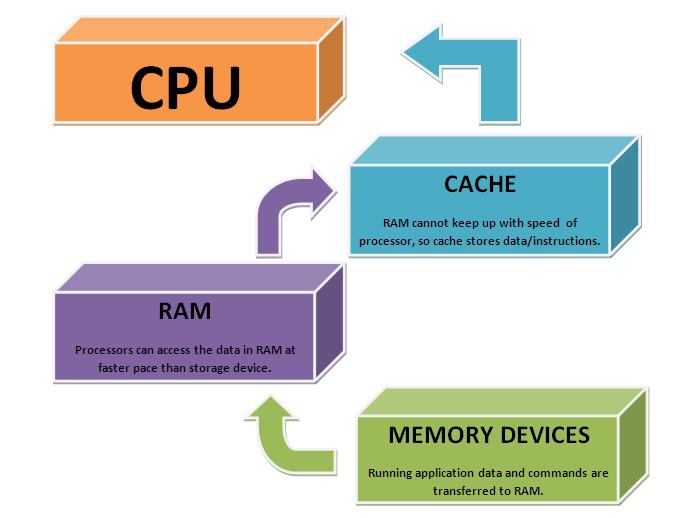
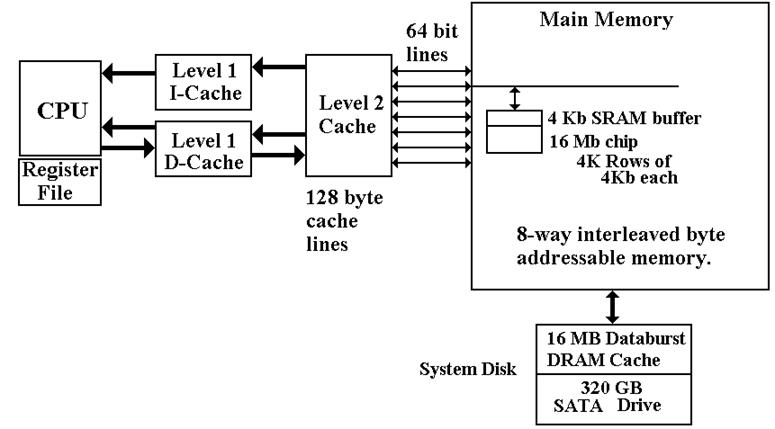
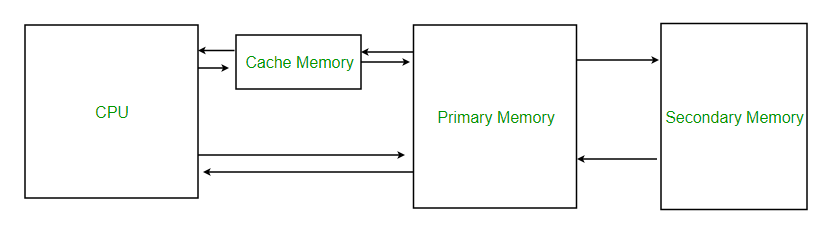
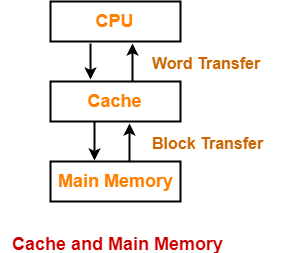
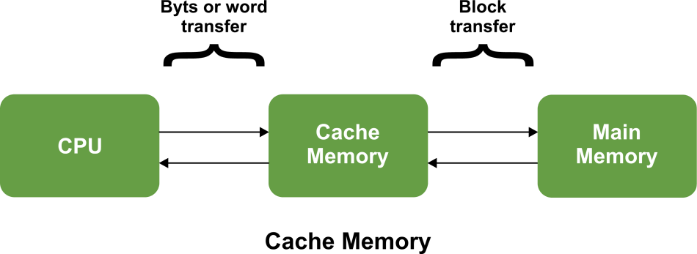
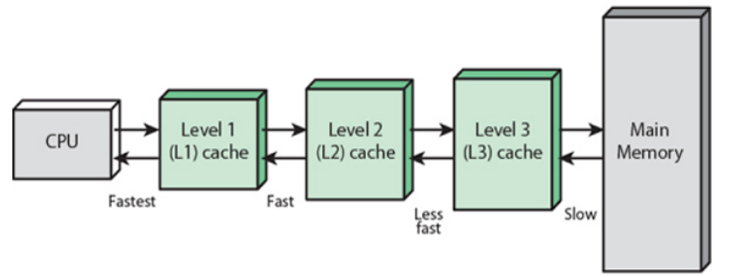
Cache memory is placed between the CPU and the main memory. Block size that are equal to the size of the. If the word is found in the cache it is read from the fast memory. Cache memory is faster than main memory. We will explain exactly how the memory cache works in just a moment. What is cache memory.
What is cache memory.
It stores the program that can be executed within a short period of time. It is important to notice that both the main memory and the cache see a bus cycle at the same time. It is used to speed up and synchronizing with high-speed CPU. 2 Access time to cache memory is less compared to main memory. Central processing units CPUs and hard disk drives HDDs frequently use a cache as do web browsers and web servers. 16-way set associative cache.
 Source: geeksforgeeks.org
Circuitry to check if one entry in Associative Cache contains a cache hit The following diagram is the logic used to check if an arbitrary entry in an Direct-Mapped cache contains. If the cache contains the memory location then the cache will respond to the. It is important to notice that both the main memory and the cache see a bus cycle at the same time. The simplest technique known as direct mapping maps each block of main memory into only one possible cache line. Draw a block diagram of memory hierarchy and explain its components.
 Source: gatevidyalay.com
Central processing units CPUs and hard disk drives HDDs frequently use a cache as do web browsers and web servers. Advantages of Cache Memory. It is important to notice that both the main memory and the cache see a bus cycle at the same time. The concept of caching is explained below. Draw a block diagram of memory hierarchy and explain its components.
 Source: webeduclick.com
Its architecture allows the processor to access information stored in the cache memory module at ultra-fast transfer speeds. By the way here we are using the terms data and instruction interchangeably because what is. You may like these posts. It stores the program that can be executed within a short period of time. The processor attempting to read a byte of data first looks at the cache memory.
 Source: engineersgarage.com
In which cache memory will have 2048 blocks containing four lines each 8192 lines 4. Its architecture allows the processor to access information stored in the cache memory module at ultra-fast transfer speeds. Figure 1 shows the mapping for the first m blocks of main memory. Servicing most accesses from a small fast memory. Cache views memory as an array of M blocks where M 2nK A block of memory in cache is referred to as a line.
 Source: geeksforgeeks.org
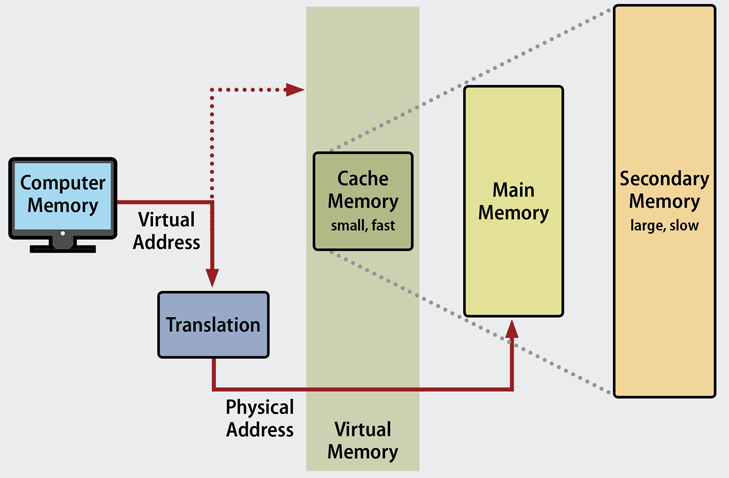
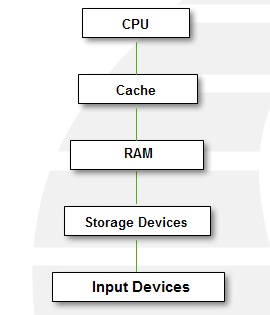
Hardware implements cache as a block of memory for temporary storage of data likely to be used again. Cache memory is placed between the CPU and the main memory. Cache memory is costlier than main memory or disk memory but economical than CPU registers. It decreases the execution time by storing the most frequent and most probable data and instructions closer to the processor where the systems CPU can quickly get it. Large memories DRAM are slow Small memories SRAM are fast Make the average access time small by.
 Source: geeksforgeeks.org
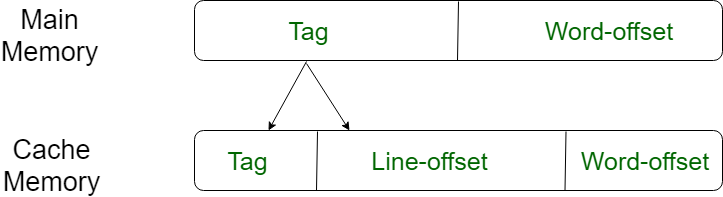
Advantages of Cache Memory. Cache memory is costlier than main memory or disk memory but economical than CPU registers. K is the line size Cache size of C blocks where C M considerably Each line includes a tag that identifies the block being stored Tag is usually upper portion of memory address Cache operation overview. Circuitry to check if one entry in Associative Cache contains a cache hit The following diagram is the logic used to check if an arbitrary entry in an Direct-Mapped cache contains. Servicing most accesses from a small fast memory.
 Source: vivadifferences.com
If the word is found in the cache it is read from the fast memory. The processor attempting to read a byte of data first looks at the cache memory. In which cache memory consists 4096 blocks and that are containing 2 lines each. If the cache contains the memory location then the cache will respond to the. Large memories DRAM are slow Small memories SRAM are fast Make the average access time small by.
 Source: edwardbosworth.com
2 Access time to cache memory is less compared to main memory. So we can say that Cache memory is a high-speed random access memory which is used by a system Central processing unit for storing the datainstruction temporarily. If the cache contains the memory location then the cache will respond to the. Into block in Direct-Mapped cache The memory is partitioned into. The Cache Memory Pronounced as cash is the volatile computer memory which is very nearest to the CPU so also called CPU memory all the Recent Instructions are Stored into the Cache MemoryIt is the fastest memory that provides high-speed data access to a computer microprocessorCache meaning is that it is used for storing the input which is given.
 Source: geeksforgeeks.org
Cache Memory cache2 The Motivation for Caches Motivation. Cache memory is an extremely fast memory type that acts as a buffer between RAM and the CPU. The Cache Memory Pronounced as cash is the volatile computer memory which is very nearest to the CPU so also called CPU memory all the Recent Instructions are Stored into the Cache MemoryIt is the fastest memory that provides high-speed data access to a computer microprocessorCache meaning is that it is used for storing the input which is given. Cache is physically located close to the CPU and hence access to cache is faster than to any other memory. Partitioning of the memory.
 Source: gatevidyalay.com
A cache controller always tries to make sure that the data required by the processor in the next memory access is available in the cache memory. In which cache memory will have 2048 blocks containing four lines each 8192 lines 4. Hence the name look aside 2211 Look Aside Cache Example When the processor starts a read cycle the cache checks to see if that address is a cache hit. Cache memory is costlier than main memory or disk memory but economical than CPU registers. Servicing most accesses from a small fast memory.
 Source: edux.pjwstk.edu.pl
If the cache contains the memory location then the cache will respond to the. Hence the name look aside 2211 Look Aside Cache Example When the processor starts a read cycle the cache checks to see if that address is a cache hit. It supplies the processor with the most frequently requested data and instructions. Its architecture allows the processor to access information stored in the cache memory module at ultra-fast transfer speeds. Reduce the bandwidth required of the large memory Processor Memory System Cache DRAM.
 Source: hazelcast.com
Where i cache line number. Cache Memory cache2 The Motivation for Caches Motivation. Cache memory is costlier than main memory or disk memory but economical than CPU registers. Block size that are equal to the size of the. The cache is the fastest component in the memory hierarchy and approaches the speed of CPU components.
Source: edux.pjwstk.edu.pl
The CPU cache is a very small memory module mounted on the CPU chip which stores files that are frequently used to operate different applications. Reduce the bandwidth required of the large memory Processor Memory System Cache DRAM. Cache memory is costlier than main memory or disk memory but economical than CPU registers. The intent of cache memory is to provide the fastest access to resources without compromising on size and price of the memory. K is the line size Cache size of C blocks where C M considerably Each line includes a tag that identifies the block being stored Tag is usually upper portion of memory address Cache operation overview.
 Source: ecomputernotes.com
2-Way Set Associative Cache. Cache views memory as an array of M blocks where M 2nK A block of memory in cache is referred to as a line. Cache memory is extremely fast memory that is built into a CPU or located next to it on a separate chip. The processor attempting to read a byte of data first looks at the cache memory. Cache memory is faster than main memory.
 Source: javatpoint.com
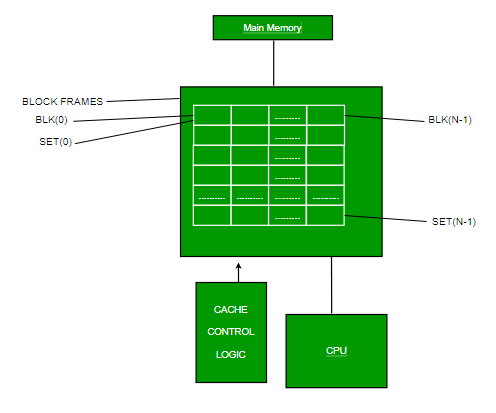
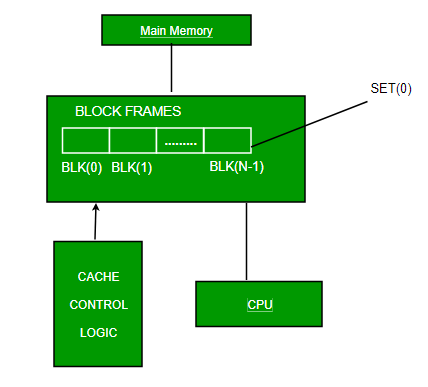
Cache is physically located close to the CPU and hence access to cache is faster than to any other memory. Cache memory is costlier than main memory or disk memory but economical than CPU registers. So we can say that Cache memory is a high-speed random access memory which is used by a system Central processing unit for storing the datainstruction temporarily. The block diagram for a cache memory can be represented as. 2 Access time to cache memory is less compared to main memory.
 Source: geeksforgeeks.org
In 16-way set associative cache the memory cache will have 512 blocks containing 16 lines each. Reduce the bandwidth required of the large memory Processor Memory System Cache DRAM. Central processing units CPUs and hard disk drives HDDs frequently use a cache as do web browsers and web servers. When the CPU needs to access memory the cache is examined. In which cache memory will have 2048 blocks containing four lines each 8192 lines 4.
 Source: includehelp.com
It decreases the execution time by storing the most frequent and most probable data and instructions closer to the processor where the systems CPU can quickly get it. Servicing most accesses from a small fast memory. Cache Memory cache2 The Motivation for Caches Motivation. 16-way set associative cache. Circuitry to check if one entry in Associative Cache contains a cache hit The following diagram is the logic used to check if an arbitrary entry in an Direct-Mapped cache contains.
 Source: ecomputertips.com
If the word is found in the cache it is read from the fast memory. Cache views memory as an array of M blocks where M 2nK A block of memory in cache is referred to as a line. Cache memory is placed between the CPU and the main memory. In which cache memory consists 4096 blocks and that are containing 2 lines each. J main memory block number.
This site is an open community for users to do sharing their favorite wallpapers on the internet, all images or pictures in this website are for personal wallpaper use only, it is stricly prohibited to use this wallpaper for commercial purposes, if you are the author and find this image is shared without your permission, please kindly raise a DMCA report to Us.
If you find this site convienient, please support us by sharing this posts to your preference social media accounts like Facebook, Instagram and so on or you can also save this blog page with the title explain cache memory with diagram by using Ctrl + D for devices a laptop with a Windows operating system or Command + D for laptops with an Apple operating system. If you use a smartphone, you can also use the drawer menu of the browser you are using. Whether it’s a Windows, Mac, iOS or Android operating system, you will still be able to bookmark this website.